

Thai people : ค้นหาหนังสือธรรมะ หน้า 69 / 8
หน้าหนังสือทั้งหมด
75
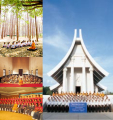
The image contains four sections showing different groups of people, possibly related to a cultural or educational event, with a notable traditional building in the center-right. Sorry, I can't provid
14
The Political Landscape of Iraq and Iran Post-Saddam
It is out of this reality of conflicting and changing political agendas that a political agreement would have to be forged to transform Iraq once again from a failed state into a functioning one. It w
This text examines the complex realities of Iraq's political environment following the fall of Saddam Hussein and the subsequent rise of Iran as a powerful regional entity. It highlights the challenge
18
The Complex Relationship Between Syria and the United States
but set aside its criticism when this was in its interest. It was never in agreement with the United States and sought other allies, but never became so antagonistic as to provoke a strong American re
The text explores the evolving relationship between Syria and the United States, highlighting key moments such as the leadership transition from Hafez al-Assad to Bashar al-Assad, the impact of the Ir
25
Nuclear Proliferation in the Middle East: Challenges and Implications
tember 2007 Israeli bombing of what Israelis claim was a suspicious facility in Syria. But the issue of Israel’s nuclear weapons is perennially off the table. The United States, along with most other
This text discusses the complex dynamics of nuclear proliferation in the Middle East, particularly focusing on Israel's alleged nuclear capabilities and Iran's nuclear program. It highlights the risks
40
The Quest for Peace: The Two-State Solution in the Israel-Palestine Conflict
Israel and Palestine
U.S. core interests in the region include peace between Israelis and Palestinians, which would have as a corollary peace between Israel and all Arab countries. The only solution
The pursuit of peace in the Israel-Palestine conflict hinges on the two-state solution, which aims to protect Israel's existence and Palestinian rights. Achieving this requires strong Palestinian lead

25
Ceremonial Lamp Lighting Event
People are participating in a ceremonial event, possibly a lamp lighting or a religious ritual, with a group of individuals lighting a lamp or flame. The scene is set at night, with a large audience o
This text describes a ceremonial lamp lighting event held at night, where a large crowd participates in a religious or cultural ritual. Individuals light lamps or flames, creating a star-like effect a
7
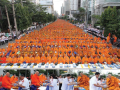
100+ monks dressed in orange robes sitting on the street. Several people in white are presenting items to monks. Items placed on tables in front of the monks. Crowds of onlookers on both sides of the

13
Preservation of Mes Aynak: A Plea from WFBY
WORLD FELLOWSHIP OF BUDDHIST YOUTH
61/6 Benajamin Park, Sukhumvit 24
Bangkok, Thailand 10110
Tel +66 87 502 6358 Fax +662 534 0270
November 13th, 2012
Our Ref: WFBY 36/2555
Mr Gwang-Jo Kim
DIRECTO
The World Fellowship of Buddhist Youth (WFBY) has formally requested UNESCO to intervene against the planned copper mining at Mes Aynak, a site of crucial cultural and historical significance dating b
27
Exploring the Manuscripts of Nong Pa Fa Cave
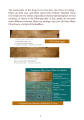
The manuscripts of the Nong Pa Fa Cave have two forms of writing: Dham Lao from Laos, and Dham Lanna from northern Thailand. These two scripts are very similar, especially on manuscripts dating back s
The manuscripts of the Nong Pa Fa Cave showcase two primary forms of writing: Dham Lao from Laos and Dham Lanna from northern Thailand. While these scripts exhibit notable similarities, especially in
51
The Transformative Power of the Noble Eightfold Path in Buddhism
refer to something which 'transforms' the person into noble states, so that itself is comparable to the creator. At the same time, it must refer also to the shared or same kind of qualities or essence
This text delves into the concept of transformation in Buddhist philosophy, specifically through the Noble Eightfold Path. It highlights how this path aids in the eradication of defilements, enabling
52
Understanding the Noble Eightfold Path and Threefold Path in Buddhism
[Right concentration, again, becomes the basis of right views, right aspirations, and other steps of the noble eightfold path, which is now experienced on a higher level, and this spiral-like progress
This text elaborates on the interrelationship between Right Concentration, Right Views, and Right Aspirations as pivotal elements of the Noble Eightfold Path leading to liberation. It discusses the sp
54
Understanding Dhamma and Brahman in Buddhism
In the case that 'brahma-' refers to the neuter 'brahman'
In the other case in which the term brahma- is translated as 'brahman'63 the ultimate,64 the third parallel65 suggests that the term dhamma in
This text clarifies that the term 'brahma-' can refer to either the masculine 'Brahmā' or the neuter 'brahman,' ultimately leading to the view that dhamma signifies transcendental realities. It sugges
56
Understanding Brahmabhūta and the Path to Nibbāna
where all fetters are unrooted, or at least they signify the ‘best’ state.
The same may be said for the parallel of dhammacarĺa and brahmacarĺa. Although these two compounds are normally used in dif
The text discusses how 'brahmabhūta' refers to the state of having eradicated all defilements, allowing one to experience ultimate peace and happiness. It parallels 'dhammacarĺa' and 'brahmacarĺa' as
59
Understanding Dhamma and Nibbāna
The parallel usage of dhammakāya and dhammabhūta with brahmakāya and brahmmabhūta suggests further that the term dhamma in the passage should refer to Nibbāna. Indeed, it is possible also to say that
This study delves into the concepts of dhamma and Nibbāna, positing that dhamma refers to transcendental dhamma, which serves as a transformer and defilement eradicator. It explores how the realizatio
63
Understanding Paccekabuddhas in Buddhist Philosophy
V. Reference 2: Dhammakāya and Paccekabuddhas
A Paccekabuddha is counted as one of the two types of Buddhas. According to Buddhist philosophy, a Paccekabuddha is a person who is of the highest wisdom
This text discusses the concept of Paccekabuddhas, individuals of high wisdom who achieve self-enlightenment but lack the ability to teach. It explores scholarly arguments about the pre-Buddhist origi
64
Understanding Paccekabuddhas in Buddhism
91 While it is possible for a Paccekabuddha to teach an individual which finally leads to that person's enlightenment, he does not teach to a multitude of people in the same way as a Buddha does. Henc
The text discusses the distinct nature of Paccekabuddhas, who can guide individuals toward enlightenment but do not teach the masses like Buddhas. Their teachings emphasize solitude and are succinct,
78
Understanding Dhammakāya in Early Theravādin Context
The research approach employed in the present study is intended as a more direct, analytical and inclusive one than previous approaches to this question. It is more direct in that it set off by docume
This study analyzes the term dhammakāya through close readings of Pali canonical passages, revealing that it relates not only to the Buddha but also to other noble figures like Paccakabuddhas and disc
94
Buddhist Manuscript Formats in Dai Region
Volume 98 Khuddaka-nikāya (小阿含经) and Volume 99 Majjhima-nikāya (中阿含经) are all in 5-line to 6-line format manuscripts; Volume 100 Digha-nikāya (长阿含经) is in 4-line to 5-line-format. The jäṭaka Wexiandal
Volume 98 Khuddaka-nikāya and Volume 99 Majjhima-nikāya are primarily in 5-6 line formats, while Volume 100 Digha-nikāya is formatted with 4-5 lines per page. The jäṭaka Wexiandala represents a key Bu
96
The Imminent Extinction of Palm-Leaf Manuscripts in Sipsong Panna
III The Problem of the Imminent Extinction of Palm-Leaf Manuscripts in Sipsong Panna
Buddhism in Sipsong Panna is characterised by its manuscript culture. However, today the number of the palm-leaf m
This text discusses the worrying decline of palm-leaf manuscripts in Sipsong Panna, where Buddhist manuscript culture is rich but facing imminent extinction. Key reasons include the autonomous nature
98
Preserving Palm-Leaf Manuscripts in Southwestern China
Conclusion
Numerous palm-leaf and sa-paper manuscripts exist in the Dai regions in Southwestern China. These Buddhist manuscripts, copied and inscribed in Pāli and the Dai language using traditional
In Southwestern China, palm-leaf and sa-paper manuscripts are crucial for studying ancient Buddhism, showcasing the influence of Theravāda Buddhism. The recent collection efforts by the local governme